
• Photo by Johannes Plenio on Pexels.com

    So far I have talked about what the board game is going to be played on, and the mechanisms of who the game is being played against. Now it is time to talk about how the players play the game.

    Each player will take control of a single character from the fake 90s Sci-fi TV show called Spaceship 47. On their turn, players will decide what their character does, and after all of the players have acted, the enemies take their turns (using the system I outlined in the previous post).

    Player Board

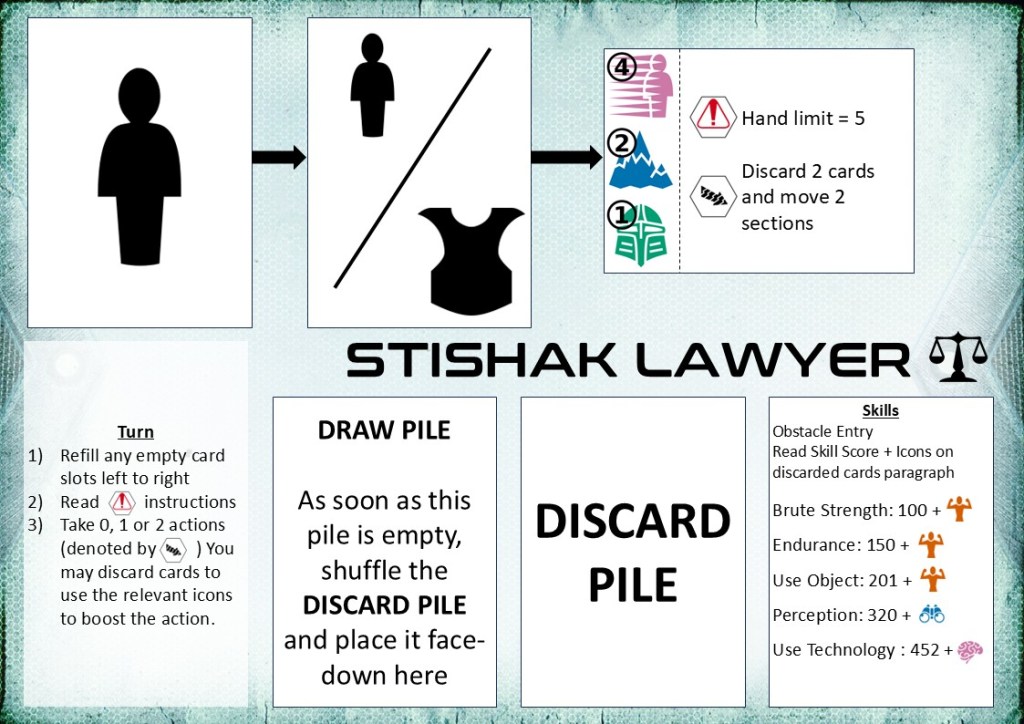
    Let’s start with the player board. Each player will have one which serves multiple functions. An example for the Stishak Lawyer character is shown below.
    Top Half of the Board

    The top half of the board deals with a player character’s defences and movement.
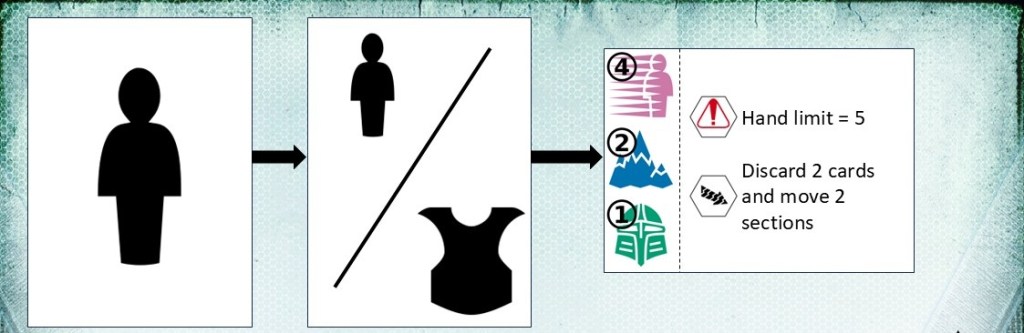
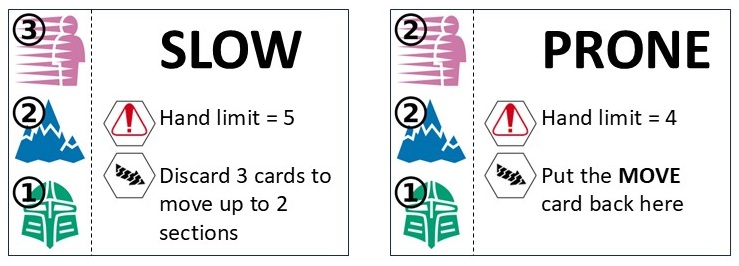
    Two slots are available for the player to put NPCs in. Some missions will require the Heroes to accompany/rescue/kidnap NPCs. One of these slots can instead be used for a piece of armour that a player may pick up throughout the campaign. The arrows show that attacks come in from the left, and will hit the NPC first. If there is no NPC in that first slot, the attack will then move onto the second slot and hit the NPC or Armour in that slot. Finally, if it gets through all of that it hits the character with the defences of the character shown in the final box. This box also serves as the state of the character in terms of movement/Slow/Prone. The above example has the character’s normal movement card in it showing that if they want to move 2 sections, then they need to discard two cards from their hand. If the character ever gets hit with the SLOW condition the card is flipped over to the reverse side where the defence values have changed and the number of cards needed to to be discarded to move has increased (below left). Finally if the character has been knocked Prone, then the card is taken out of the board, revealing the Prone condition that has been written on the board itself (below right).
    Bottom Half of the Board

    Going back to the Player Board, the bottom half is all about the payer’s turn.
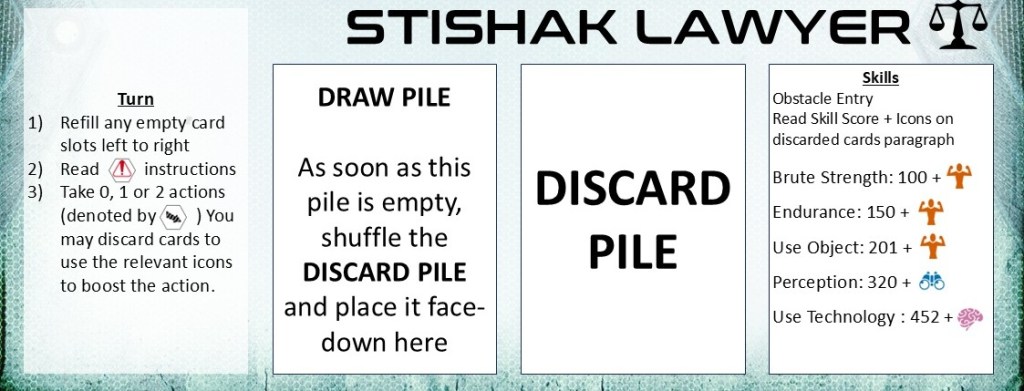
    The text in the left most box tells the player what they can do on their turn, the middle two boxes has the player’s deck and discard pile. Finally the box on the right contains the skill list for the character. I haven’t decided whether the list will be exactly the same for each character or whether each character will have slightly different skill lists.

    Player Actions

    The characters need to be capable of overcoming all of the challenges that they face. For example, if there is a brick wall and no character has a way to get to the other side then that is stupid. However, the players should be limited in what they can do on a turn or the game would be too easy.

    Deck Building

    I’ve chosen deck building as the mechanism with which players decide what to do on their turn. A player’s deck will have the potential to contain all of the abilities they need to complete a mission but the deck may not contain the abilities at the start of the game. As the episode continues, then like characters in a TV show, the characters will learn more about their situation and be able to overcome the challenges faced. This is represented by gaining better cards throughout the mission just like any good deck builder.

    Deck Builders were all the rage a few years ago when I was really getting into making this game, and as I hate jumping on band wagons, I resisted for far too long to use this mechanism for Spaceship 47 (and I love Deck Building games!). But the starting out with limited abilities and growing over the game, matches the format of the type of TV show that Spaceship 47 would’ve been too well for me to not use it.

    An example card can be seen below. The arrow in the circle in the top left of the card denotes that it takes one of the player’s actions to play the card. The text next to the arrow is the name of the action, in this case it is “Sniper Rifle”.
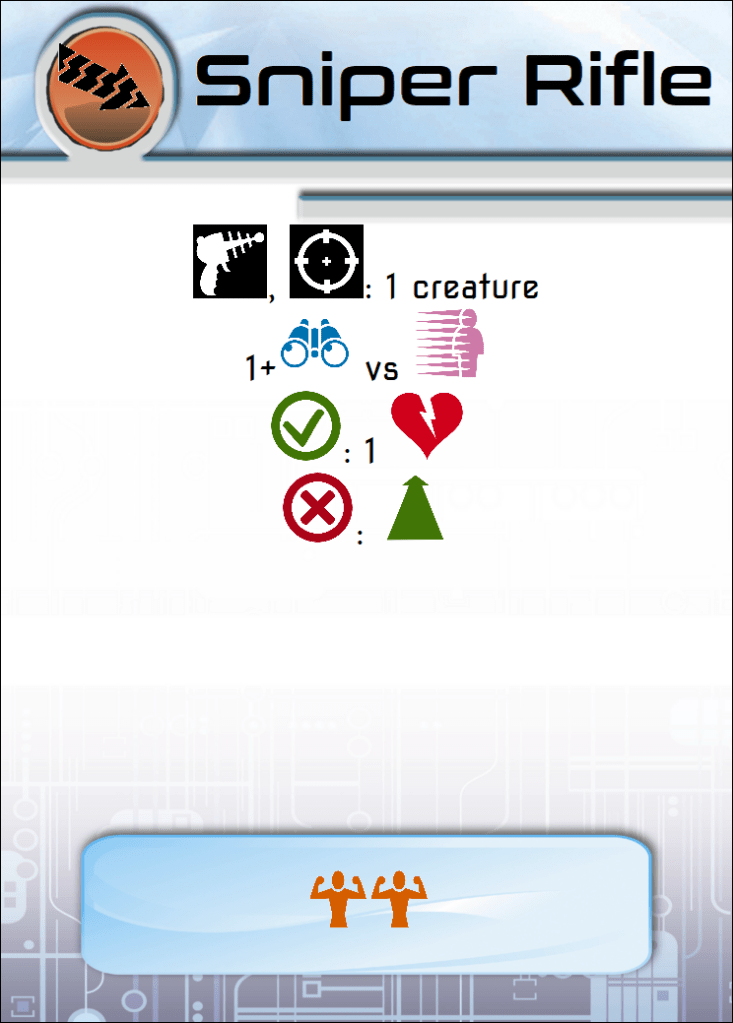
    Below that is a ray gun which denotes that the action is a arranged attack. Ranged attacks mean that the player can target any other location card that shares a targeting colour with the location card they are standing on (see this post for more details). Next to the ray gun symbol is the target symbol and the text “1 creature”, which further defines who the player can targe with this action.

    The next line has “1 + Vision icon vs dodge icon”. This means that the attack score for this action is 1 plus however many Vision icons are on he bottoms of cards that the player will discard to boost this attack. That total is compared to the target’s defence score. If the player’s attack score is higher than the target’s defence score then the action succeeds, otherwise the attack fails.

    Below the attack line is a green tick in a green circle. this is the line which tells the player what happens if this attack succeeds. In this case the 1 broken heart means that the player has inflicted one damage on its target.

    Below the success line is the failure line, which is denoted by a purple cross inside a purple circle. In this case the green up arrow denotes that the player can take one level up card from the level up deck and put it to one side. If a player ever gets three level up cards, then they can look at them, pick one to add to their player deck and discard the other two level up cards.

    The final part of the card is at the bottom, where two icons of the strong man pose (which denotes Physique in this game). This means that instead of using this card for its action, that it an be discarded to add two physique icons to another action that the player is using.

    Skill Usage

    During a mission, certain locations will have things that the players can interact with – locked doors, impassable chasms, etc. These locations require skills to overcome. The player will choose which skill that they wish to use from their player board, then they can discard cards from their hand with the relevant icon on them, to boost their skill check. The skill list from the example player board above is repeated below. The player has the option of using one of five skills:

    • Brute Strength: 100 + Physique
    • Endurance: 150 + Physique
    • Use Object: 201 + Physique
    • Perception: 320 + Vision
    • Use Technology: 452 + Intelligence

    Each of these skills has a number next to them with the + symbol and then one of three icons. This means that when the player selects that skill, they take the base number and adds the number of relevant icons on the boost section of cards that they have discarded to boost their skill check. Then the player opens up the mission book to the appropriate location entry and reads the numbered paragraph that relates to their skill check result. The text will tell them what happens next. this was inspired by the Adventure Games by KOSMOS.

    Character Arcs

    One of the things that I wanted to do for this game is to make it feel like the character that the player is playing, goes through a character arc over the course of the campaign. Looking at shows like Babylon 5 and Deep Space 9, it would be impossible for this board game of a 90s Sci-fi TV show to not have the characters evolving. An advantage of having this continuous personal story that the players are playing through, is that some campaign board games tend to fizzle out before they are finished. I am hoping that in addition to the relatively low number of missions (twelve), that players will be eager to see how their character arc ends.

    Lots of board games these days, have emergent stories, almost being like RPGs in that respect where the story is not pre-determined and the narratives emerge naturally from the interaction of player decisions and the components of the game.

    Unfortunately, I am not smart enough to design something like that, so I am going to create a specific character arc for each character in the game.  The arc will have the character starting out in one position, for example hating Humans, and then evolve into another position, for example, accepting that Humans are OK. To me this is more like a traditional board game where you are given a specific goal and try to achieve it as best as you can.

    For a player to win Spaceship 47, they and their team mates need to have succeeded in the overall campaign in addition to the player completing their character’s story arc.

    The beats of the story arc will be in the form of player action cards. The first stage of one of the character arcs is shown below:
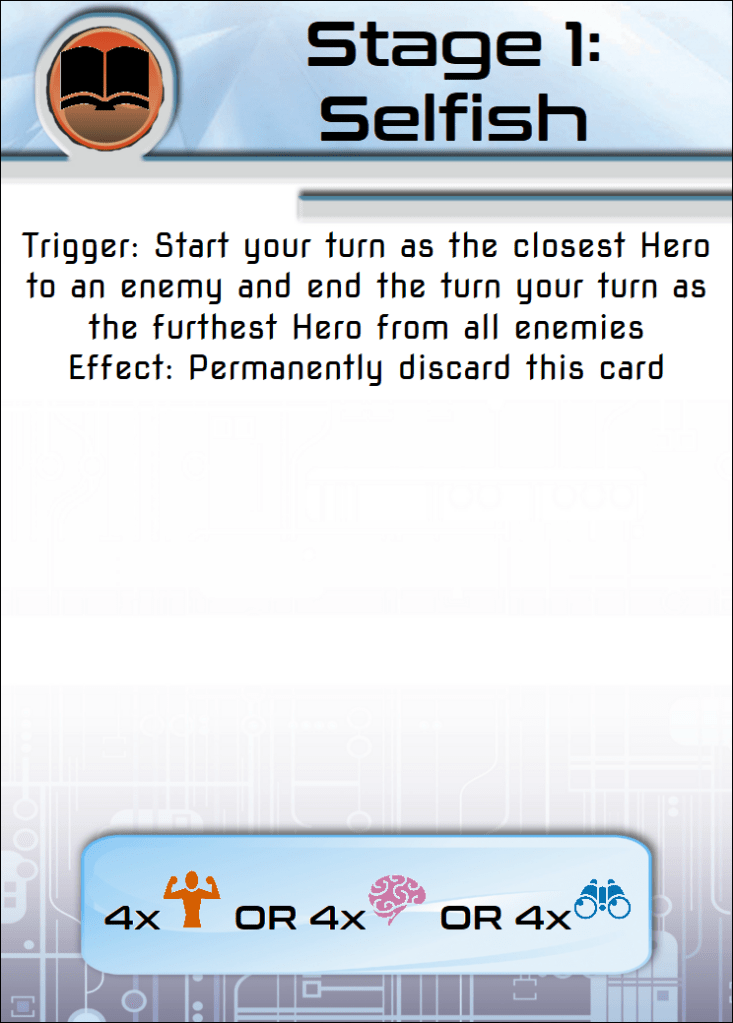
    The open book icon in the top left shows that this card is a character arc card. The text to the right of this is the title of the card, in this case Stage 1: Selfish. The main text tells the player what they need to do to achieve the goal of this stage of the character arc, in this case, start their turn as the closest Hero to an enemy, but end their turn furthest away from all enemies.

    The Effect line is next and tells them what to do if they achieve this goal, namely to discard this card permanently.

    Finally in the boost section, this card can be discarded to boost other actions, but it contributes 4 of any one icon. to the check This is better than any other card that the player starts off with.

    This card is incredibly useful in the deck of a player, so the player has to decide whether they want o rid themselves of the card, or whether they want to complete the stage of the character arc. Only one stage of the story arc can be completed per mission.

    Conclusion

    This post has taken me ages to write. Mainly because I’ve entered another game I am working on into a competition, so my focus was on that. But also, I’ve been going round in circles with this topic with various different ideas, until I realised I just need to put something down (i.e. what I already had decided before brand new ideas kept entering my head) and play test it and if that doesn’t work then change it. So there we are, the third post that should give people an idea of what this game is. Now on to designing the first mission. Wish me luck!

  • Photo by lucas souza on Pexels.com

    Spaceship 47 is the board game of the best 90s Sci-fi TV show that never existed. It is a co-operative campaign game for two to five players, where each player will take control of a single character and work together as a team to complete the missions. This is the second in a three-post series discussing where the game is at the moment. The first post can be found here.

    Barriers and Hindrances

    It would be a pretty boring game if there was nothing for the players to fight against, nothing for them to overcome. Therefore, we need to add barriers to progress and hindrances for them to overcome while they are trying to rescue Earth from the iron grip of the evil Draydun aliens.

    Currently I can see three distinct types of hindrances to the payer characters:

    1. Enemies – sentient beings, robots, creatures, etc.
    2. Obstacles – Locked doors, chasms to big to jump across – anything that is an inanimate object that by existing, makes it harder for the players to complete their mission.
    3. Conditions – When players get hit by attacks, when obstacles get too much for them, they might have conditions imposed on them, such as being DAZED, RESTRAINED etc.

    Let’s use the example of the very first scene that the players will encounter to show how the game (as it currently stands) will handle these elements.

    The first episode/mission starts off with the Heroes (characters played by the players) escorting a prisoner to a ship. The prisoner has been found guilty of killing the Stishak Ambassador to Earth.

    Also on the scene are a protest group who believe that aliens should not be allowed on earth and who support the killing of the ambassador, and will attack the Heroes, hoping to release the prisoner. A counter-protest is also taking place that will try and attack the protestors and some of the more extreme elements of the counter-protest will even try and kill the prisoner.

    The Mission Objective is to escort the Prisoner to the ship without him or any other human dying.

    Enemies

    My motivation for enemies in the game is that I want the actions that the enemies take to feel logical. I’ve played some games that just randomise the enemy actions and it leads to them acting in odd ways.

    At the same time, I want the resolution of what action and how successful it is to be quick. The game should be focused on the players and their decisions and shouldn’t take the spotlight away from them for too long. This is what I’ve come up with. I doubt it will survive play testing, but I am looking forward to seeing how it plays out.

    As an example of the thought process, lets take the Protestors from the first scene. They want to get to the Prisoner to free him.

    Action 1: Move up to 2 spaces towards the Prisoner

    The Protestors will want to attack the Heroes when they are in range so that they can free the Prisoner

    Action 2 : Throw a Smoke Bomb at a Hero

    If the Protestor is getting attacked by the counter protestors, they will want to react by attacking them back.

    Action 3: Throw debris at a Counter Protestor

    And finally, if they have been injured enough then they will retreat.

    Action 4: Move towards the corner of the map

    There will be four protestors in this scene, who will all have these four actions available to them. Therefore we can create a single card for the four protestors which you can see below.

    This card contains:

    • the name of the enemy (Protestor);
    • the trackers to use for the four enemies (A, B, C and D);
    • the defence values for the Protestors (Dodge = 2, Fortitude = 3 and Will = 1);
    • The four actions that were listed above.
      • Grey square – Move towards Prisoner
      • Green cube – Attack a Counter Protestor
      • Magenta Cube – Attack a Hero
      • Red Disc – Retreat

    We now have the four actions the enemy can take, but when it is the enemy’s turn, how do we let the players know which action the enemy should take? Through the use of cards, a board and coloured cubes/discs.

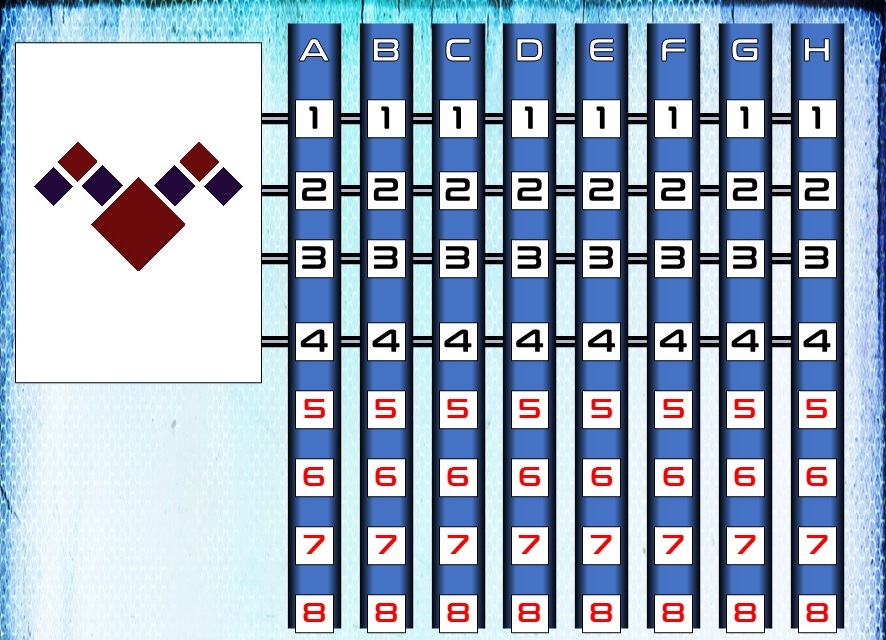
    Below is the enemy tracker board used in all missions. There are eight columns, one for each potential enemy in a scene (not all columns are used in every scene). As denoted by the Protestor card above, columns A through D are to be used for the Protestor enemies.

    A rectanlge long side vertical, is present on the left which is a space for a playing card to put in. eight columns of eight squares make up the right hand side of the board. The eight squares read 1 to 8 vertically. Four horizontal lines reach from the card space through the top four squares of each column.

    The numbered squares serve two purposes. The first is to track the health of the enemy. The maximum amount of health these enemies can have is eight. When an enemy takes damage, a number of red discs equal to the damage taken is added to the highest numbers that are not covered by a red disc. Once all eight numbers for a particular enemy have been covered by red discs, that enemy is dead.

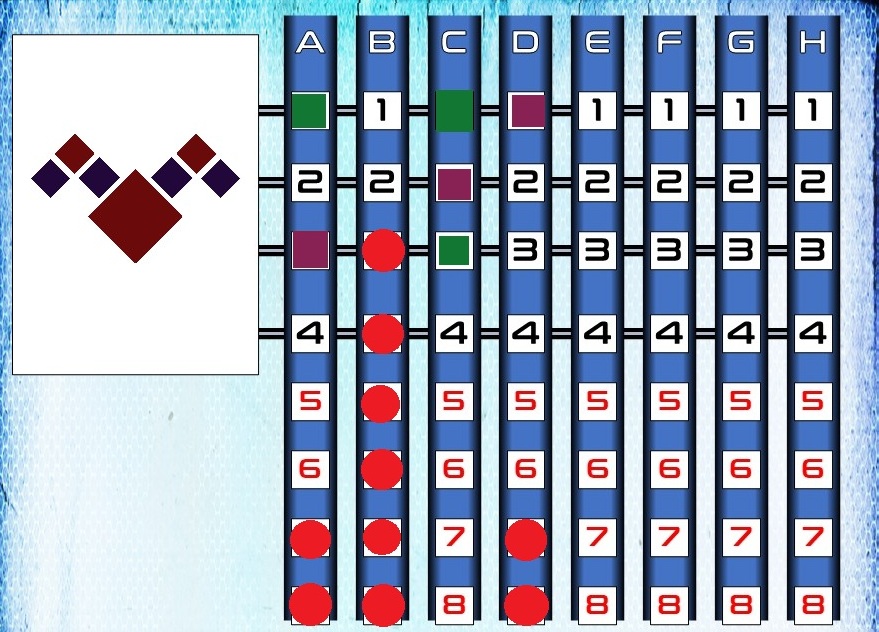
    The lower four numbers – the ones with horizontal lines going through them – are used to determine the action an enemy takes. Throughout the scene, the players will be instructed to add cubes to these numbers. Usually this is because they have successfully attacked the enemy, but other times it might be because the enemy has wandered into a certain section or other mission dependent triggers. After a few turns the board should look like something like this.

    As the previous image, with red discs present on column A, squares 7 and 8; column B, squares 3 to 8; column D, squares 7 and 8. A green cube is present on column A, square 1; column C, squares 1 and 3. Magenta cubes are present on column A, square 3; column C, square 2 and column D, square 1.

    Here, enemy B has been injured the most as it it only has 2 health left. While enemy C has not been injured at all. Each of the enemies has various numbers of cubes and discs on their tracker, so how do we decide which of the actions triggered by the different coloured cubes/discs will occur? A deck of Enemy Action Resolution Cards is used. An example card can be can be seen below.

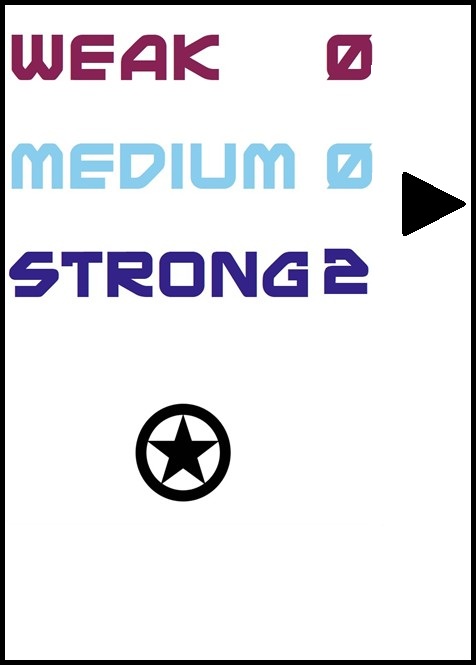
    An example of an Enemy Action Resolution card. The words WEAK, MEDIUM and STRONG are in a column on the left hand side of the card. Next to them are the values 0, 0 and 2 respectively. A black triangle is present on the right hand side, with its apex pointing towards the right hand side of the card. Finally a black star inside a circle is present.

    There are five elements to this card, the WEAK, MEDIUM and STRONG values, the arrow on the right of the card and the star in a circle. The arrow is what decides which action the enemies take. When a card is drawn it is put on the board like below.

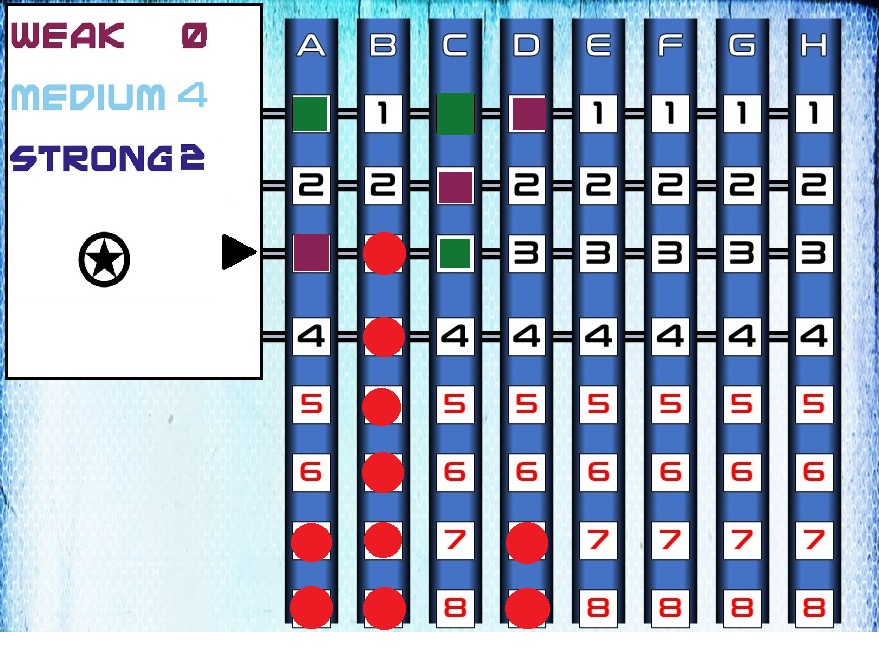
    The Enemy Tracker Board. A card is present in the slot and its arrow is pointing at the third horizontal line.

    The arrow on the card is pointing at the third row. Because Enemy A has a magenta cube on their third slot, they will take the Throw Smoke Bomb action. Enemy B is too hurt to fight as it has a red disc on its third slot and so will take the Retreat action. Enemy C will take the Throw Debris action as the counter-protestors must have attacked them. Finally, Enemy D will take the default action which is to get closer to the Prisoner.

    The strength of any attacks made by an enemy is determined by the WEAK, MEDIUM and STRONG values on the Enemy Action Resolution card. The example Protestor card says that the Throw Smoke Bomb attack is MEDIUM v Dodge. In the example Enemy Action Resolution card on the board, the MEDIUM value is 4, so therefore, to determine whether the attack hits, you would compare 4 to the value of the target’s Dodge value, if it is higher than the Dodge value, then it succeeds. All enemy attack values are even, and all Hero defence values are odd, so there will never be a tie when an enemy attacks a Hero.

    I feel like the actual time taken to resolve the enemies’ actions on their turn should be fairly quick. Draw a card, go from left to right to see what each enemy does, resolve the action with the help of the WEAK, MEDIUM and STRONG values printed on the card and voila, back to the Heroes. The major flaw I am anticipating is it being fiddly putting cubes on the enemy tracker board when it isn’t their turn.

    Obstacles

    Like most co-operative board games, Spaceship 47 will require the players to have to handle different problems at once, deciding what resources they need to assign to each problem so that they can succeed in their mission. Enemies are one type of problem and Obstacles are another type.

    As obstacles will be non-sentient stationary things, the mechanism for interacting with them will be a lot simpler than for enemies. The exact mechanism will be dependent on what mechanism I use for the players to select the Hero actions. At the moment I am thinking that obstacles will either be overcome by a single successful action in which the players spend resources to accomplish the task, or by multiple successful actions, requiring the players to focus on overcoming the obstacles while other things are vying for their attention.

    To make the Heroes feel more fleshed out, I want them to be good at different things. This then means that Obstacles need to have multiple ways to be overcome, as a game with 2 players will not have as a wide spread of skills as if there were 4 Heroes. A Scientist or Engineer might fix the keypad, whereas a Soldier might just try and kick the door in. The obstacle will list the different skills that can be used to overcome it, so that the players can decide what party resources they will spend on this particular problem out of the many that they are facing.

    Conditions

    Throughout the the game, various obstacles, enemies and even the map itself will impose negative conditions on the Heroes. Some of the most common ones you see in this type of game are:

    • Prone – The Hero is prone on the floor, it is easier to hit
    • Slowed – The Hero can no longer move up to their maximum speed
    • Restrained – The Hero cannot move at all and it is harder for them to attack
    • Blinded – the Hero cannot see, it is harder for them to carry out tasks
    • Weakened – the Hero is suffering some sort of poison or venom and is feeling sluggish, the Hero is easier to hit.
    • Dazed – The Hero has been hit pretty hard and will stagger around for a bit

    Again, I need to know exactly how the players are going to select their actions before I decide how to implement these conditions that would impede the action selection. If, for example, the mechanism was deck building and the player has a hand of cards to choose from for their Hero’s action and the Hero gets Blinded, then maybe the player would have to discard a certain number of cards to be able to play an attack card. Hands of cards can be used in other ways such as changing the hand limit, having cards that the player has to play during their turn etc.

    Conclusion

    Blimey, that was quite a slog of a post to write, but it has helped me refine my thoughts on some things so it was useful. Next up? Work out exactly how the player chooses their actions.

  • Photo by Andrew Neel on Pexels.com

    Spaceship 47 is the board game of the best 90s Sci-fi TV show that never existed. It is a co-operative campaign game for two to five players, where each player will take control of a single character and work together as a team to complete the missions. This is the first in a three-post series discussing where the game is at the moment.

    Game Overview

    The game will be the first season of a non-existent 90s Sci-fi TV show, which is twelve episodes (or missions) long. I am aiming for each episode to take about 2 real-world hours to complete.

    Each player takes control of a single character to navigate the mission that the players are playing through. The idea is that each player plays their character for the entire season, attempting to complete the over arcing character’s story, as well as contributing to the success of the individual missions with the other players.

    Each episode consists of three scenes, with the players playing through each scene in turn, completing the scene objective before moving on to the next scene. The three scenes, along with the read aloud text between scenes makes the five act structure of a TV episode.

    The Map

    The must-have requirements for the map in this game are:

    1. Fast setup – I don’t want a bunch of tiles that you have to put together based on a map in a book
    2. Dynamic – I want the map to change as a result of player decisions or story beats that throw up new obstacles for the players
    3. Easy line-of-sight – I would like the players to be able to look at the map and know exactly which characters can see which other ones on the map. No rulers, no counting.

    The nice-to have but not essential requirement is:

    1. 90s TV Show Budget – I would like to give the impression that the same set is being redressed for “new” locations due to the budgetary constraints of a 90s TV show

    I have come up with an idea that meets all of the above requirements, but unfortunately I don’t think its is feasible.

    Current Idea

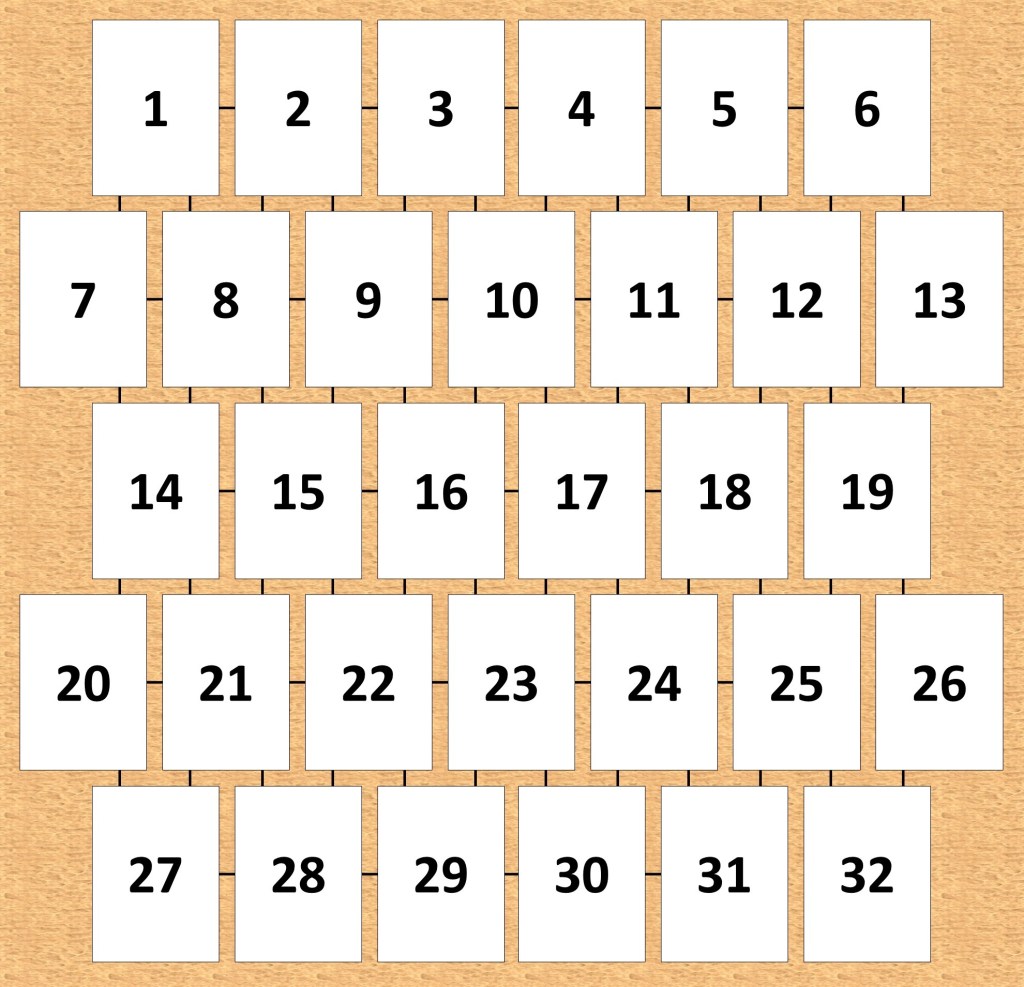
    The game will come with two boards, one for scenes that take place outside and the other board is for scenes that take place inside. The board for the outdoors scenes is shown below. The boards will be dual-layered and each white rectangle is a recess, the size of a playing card.

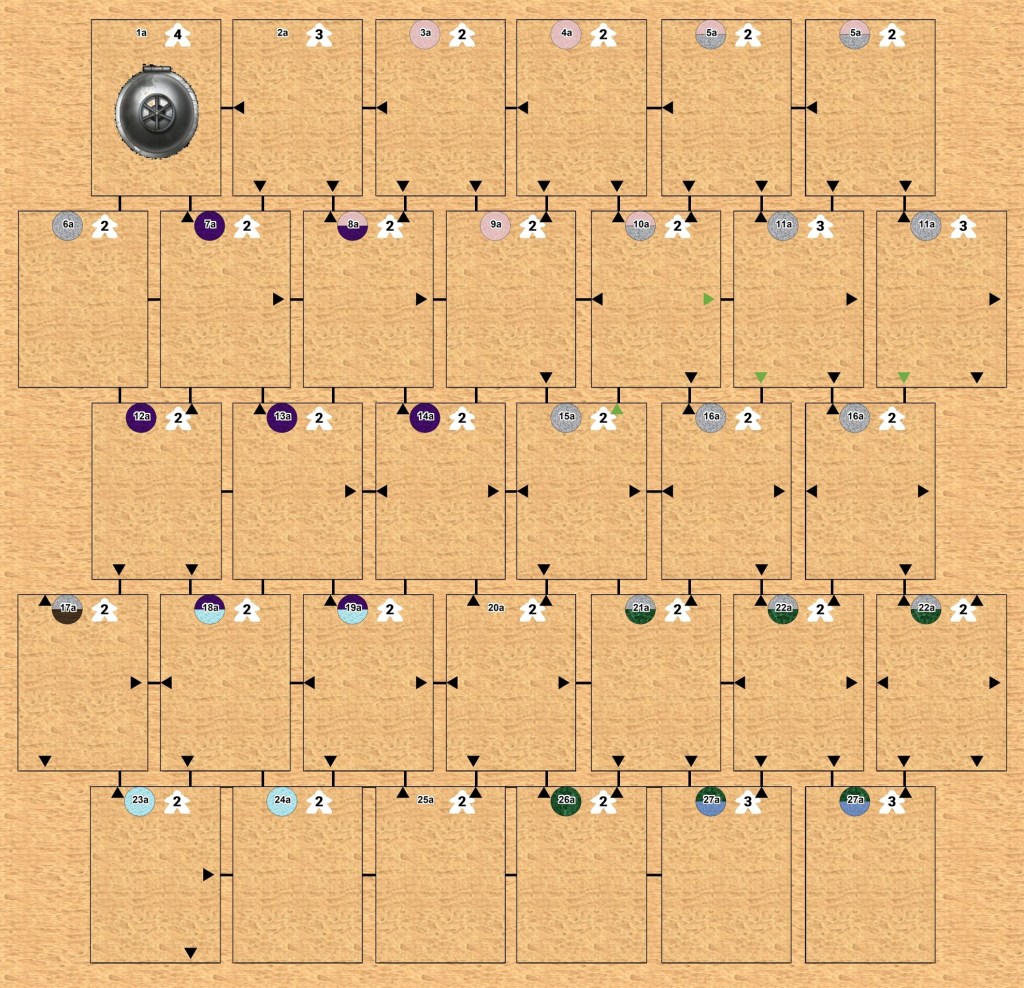
    For each scene in a mission, the players deal cards into the slots of the board to make up the map for the scene. This matches requirement (1) as the setup is as fast as dealing cards out and putting some enemy standees on certain cards. It also meets the non-essential requirement as there will only be two boards being redressed each mission. The board used for outdoor scenes is shown below. On the left, the cards have not been dealt out and on the right the cards have been put in their appropriate slots.

    The board for scenes that take place outside

    Below is an example of one of the location cards.

    An example of a location card

    The location card has the following elements, which most location cards in the game will have:

    (a) A circle with a number in it. The number is which slot the card goes in. The colours in the circle make the targeting of ranged attacks simpler. It uses the Tannhauser mechanism reimplemented by Unmatched. If the card your character is on and the card your target is on have a colour in common in the targeting circle then you can attack the target with a ranged attack. This meets requirement (3)

    (b) A meeple with a number on it. This shows how many characters (both player characters and non-player characters) are allowed on the card;

    (c) Arrows showing which direction a character can move. At times, the arrows will be different colours to help with the game. For instance, the green arrows in the complete map above dictate the direction a player character is forced to move while they are suffering from the DAZED condition in this particular mission. Other coloured arrows could be used to show which way guard robots move as they travel round their preprogrammed route.

    (d) Other images, such as the hatch in the example. The reverse side of the card shows the hatch open; This meets requirement (2) as flipping over the cards changes the state of the map, making it dynamic.

    (e) An image as the background that helps make up the map, not leaving any blank spaces on the board.

    So, if this map system meets all of the requirements, what is the problem? The sheer amount of cards I will need! I am going to make 12 missions, each with three scenes in. The indoor map is arranged differently to the outdoor board and holds 35 cards. If I need an average of 33 unique cards for each scene, then that is a total of 1,188 cards over the entire campaign! And that is just for the maps, that does not include the cards for player actions, equipment, NPCs and who knows what else I will need.

    To put this in context Gloomhaven has a total of 727 normal sized cards and 975 mini sized cards. Vantage, a game where you explore an entire planet only has 1,300 cards. Vantage doesn’t have two big boards to fit into its box either.

    I think over 1,188 cards for the game is unfeasible, especially as I need room in the box for the two boards, the player boards, minis for the player’s characters, etc. Therefore, I either need to come up with a completely new way to do the maps, or modify this system so that it uses fewer cards.

    My first thought was keeping the board as is, i.e. having recesses for cards to be put in but instead of the recesses being blank, there are default “cards” printed into each recess. Then, for each scene, cards are put into just the slots where they are needed for that scene. If I were to limit the map to using 5 cards per scene that would reduce the number of map cards needed for the entire campaign to 180.

    Then I remembered the line of sight mechanism. If I put a card in slot 3, then the line of sight for cards 2, 4, 9 and 10 will almost certainly need to be changed. Already the number of cards is creeping back up to the numbers I didn’t like.

    So the line-of-sight rule would need to be changed. I could just make it that melee attacks target anything on the same location as you and ranged attacks can target any connected location, but this seems overly restrictive.

    This really feels like something I will only resolve as I actually create the missions, so I better get on with that!

    Conclusion

    With the number of cards needed for the current map seemingly excessive and with a change to the maps potentially killing the line of sight rule, it really feels like a “killing your darlings” moment. The trouble is I don’t know which darling should be killed and what would replace it.

  • The theme of the game is to evoke the feel of a 90s Science Fiction TV show. Back in the 90s, I was a massive fan of Star Trek and Babylon 5 and to a lesser extent Stargate SG-1 and wanted to write my own space exploration TV show. Of course, I was a teenager who never went near the TV industry. But as my interest in board games grew, I thought I could turn the story into a board game.

    The original idea of Spaceship 47 back in the late 90s is different than the story that will be told with the board game.  Partly that is because it is impossible for an unpublished story to satay the same over 30 years but mainly it is because telling a story via a TV show and a board game are different and the story needed to change because of the media I am using for the story.

    It is a funny age that we live in that there can be spoilers for a board game, but the following outlines the campaign story for the board game, so if you don’t want to be spoiled then don’t click on the spoiler below.

    Click to reveal the spoiler In the board game, Spaceship 47 is the only spaceship to escape an attack on Earth by an evil alien race called the Draydun.  A “black hole bomb” is detonated as they are leaving, slowing down time in the vicinity of Earth. This gives the spaceship 10 weeks to travel the galaxy, find allies, technology and information that they can use in the final episode where they come back to Earth to liberate the planet from the evil Draydun.

    The campaign of the board game will be split into 12 missions/episodes.  The first mission will serve as the pilot episode of the board game, setting up the story of the season, then the next 10 missions will see the crew travelling around the galaxy and then the final mission will be when they attempt to take back control of Earth before the Draydun’s attack succeeds.

    Each player will take the role of one of the crew of the spaceship and the players will work together to complete each mission using their character’s powers and their own smarts to either succeed or fail the missions together.

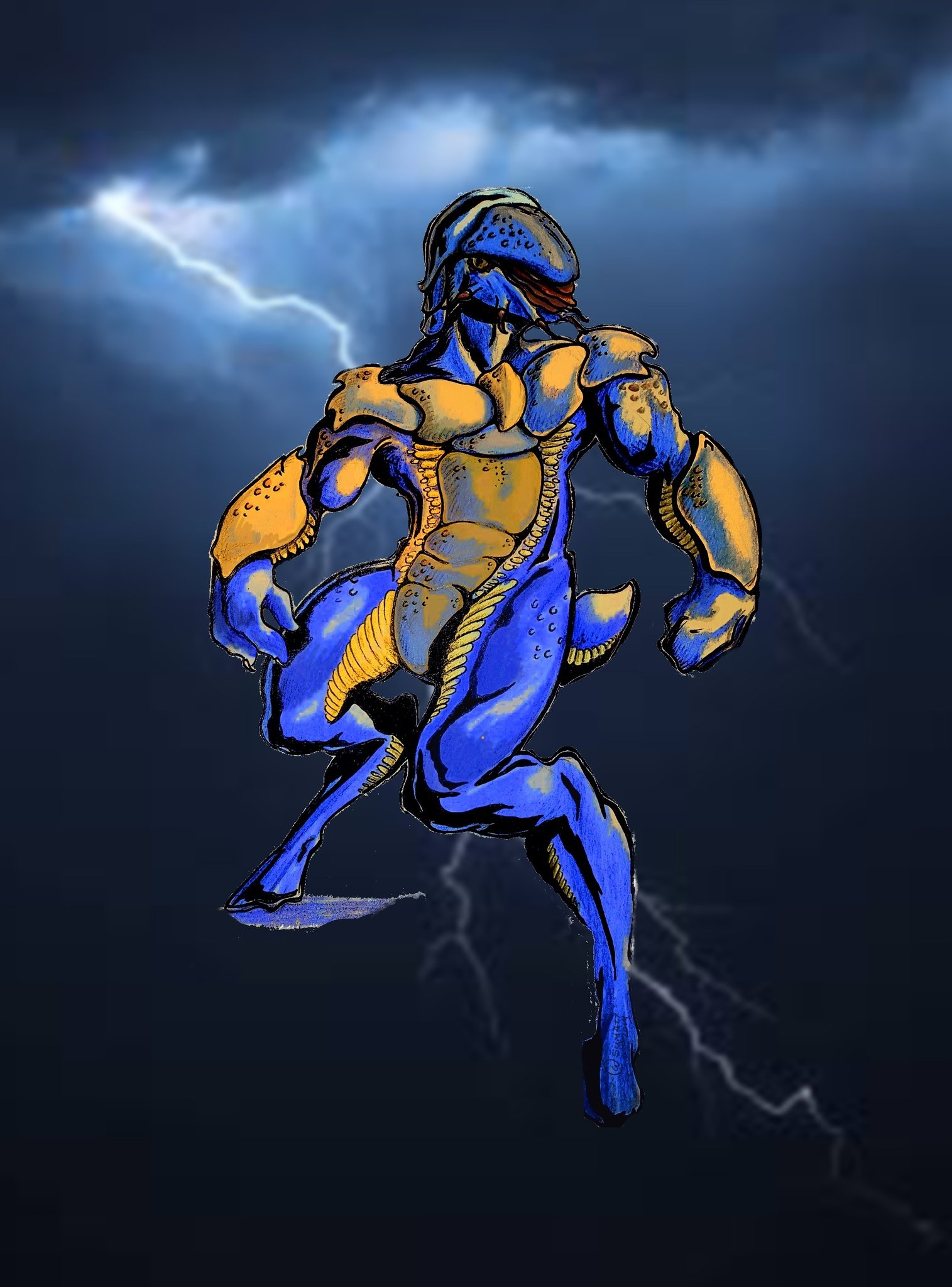
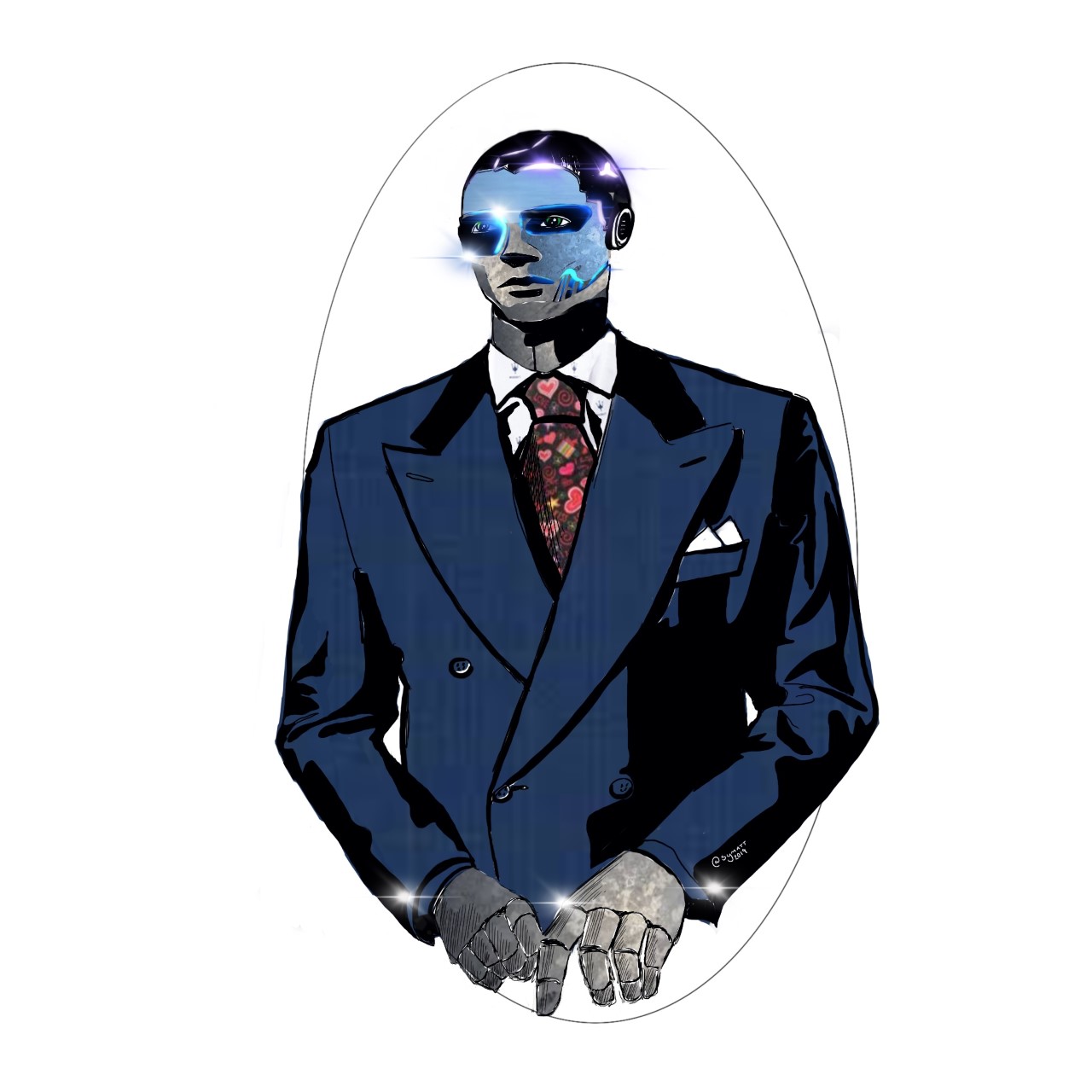
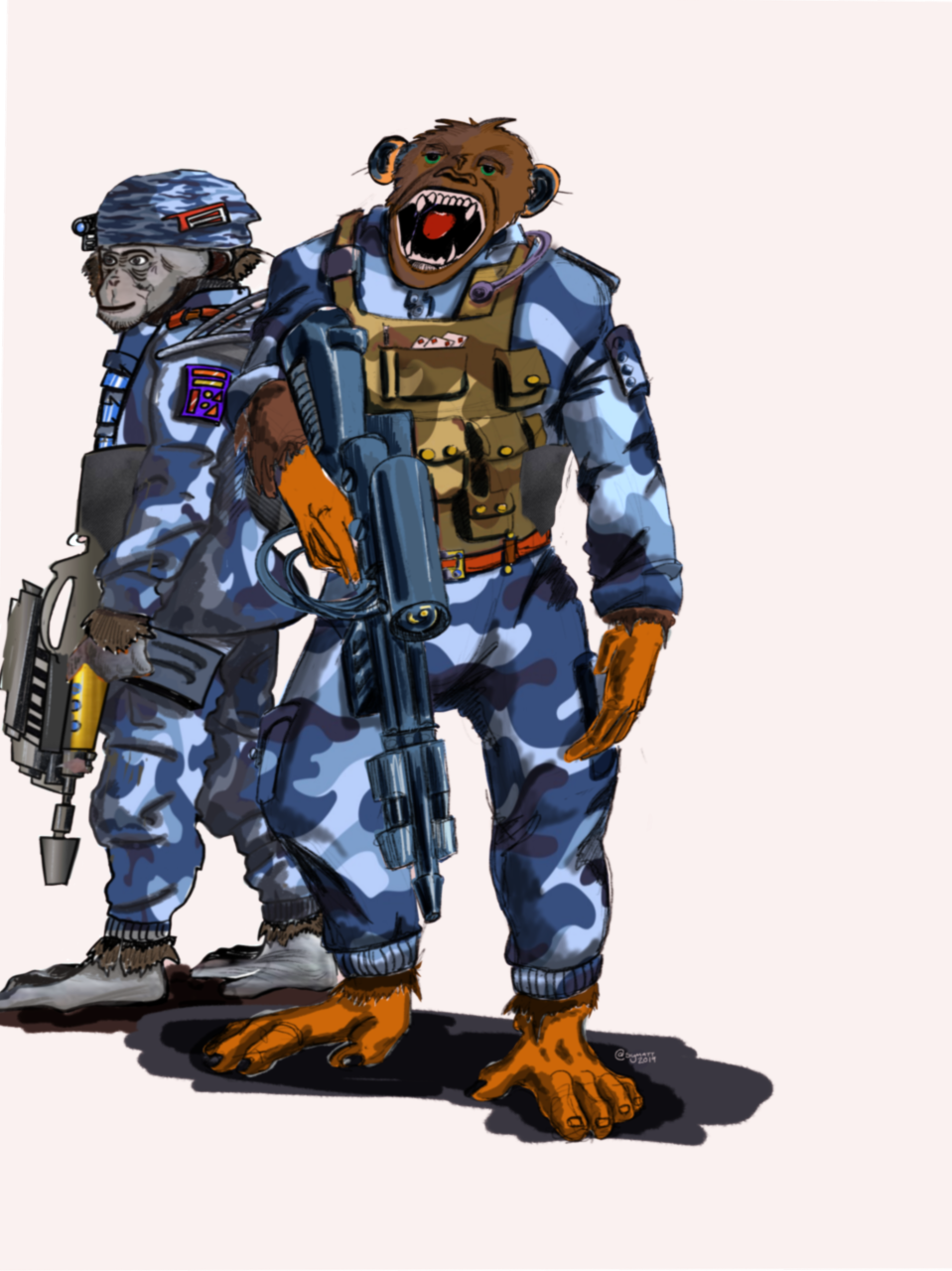
    There will be at least four characters to choose from (as the game is for 2 to 4 players!), with at least four species included. Below are the three non-human species, from left to right, the Stishak: a friendly alien species that could help the Humans; androids; sentient chimpanzees.

    ALT TEXT: There are three images. The left most image is of a lizard like creature standing on two legs with blue and yellow skin with a lighting strike happening behind it. The centre image is of a metallic humanoid in a suit . The right most image is of two chimpanzees dressed in combat fatigues and holding guns.

    All art by Symatt (https://bsky.app/profile/symatt.bsky.social)

    The inclusion of the Stishak as one of the main characters is a nod to Star Trek where one of the main characters is always an alien (TOS: Spock; TNG: Worf; DS9: Kira Nerys; Voyager: Tuvok) although the Stishak character is more like Teal’c in SG-1 as it knows more about the galaxy that the humans are exploring.

    Another nod to Star Trek is the Crimson Shirted Rookies that the players will have with them on each mission that can be sacrificed to stop bad things happening to the main characters. These Crimson Shirted Rookies are replenished at the start of each mission.

    As well as a Species, each character will also have a profession. I am unsure which professions will be included in the game, but the Stishak will almost certainly be a Diplomat. Other professions may include: Engineer, Doctor, Security Officer, Scout, Sniper (which would be called Deadeye in the game) and Science Officer.

    The next blog post will discuss the first mission and will hopefully talk about some of the rules of the game.

  • Spaceship 47 is a board game I am working on that is based on a 90s Sci-fi TV show that I came up with when I was a teenager. Just to be clear, it never went beyond the idea stage – there is no TV show called Spaceship 47. 🙂

    The Design Goals:

    • Have the feel of a 90s TV show like Deep Space 9, Babylon 5 or Stargate SG-1
    • Quick set up – Once you’ve decided to play an episode of Spaceship 47, you should be playing within 5 minutes.
    • Characters with story arcs – each player chooses one character which they will play for the entire 12 episode campaign, with an ongoing story arc that the player must achieve for their character by the end of the campaign
    • A dynamic map – each character and any enemies that the characters encounter will be represented by minis and will move around a map that can change, based on story reasons or decisions by the players
    • 12 episodes – partly to save my sanity and partly as campaign board games can fizzle out and never get completed, I will create a twelve-episode season that the players will go through. More like Pandemic Legacy than Gloomhaven.
    • Eliminating Rules That Stop the Game – Nothing frustrates me more than when we are in the middle of a game, things are nice and tense, we are on the verge of victory or defeat and then the game comes to a grinding halt because we have to look up a rule, or work out line of sight etc. So as every game designer has ever said, my goal is to eliminate this.

    I will stop there as I don’t want to overdo it on my first post back 🙂